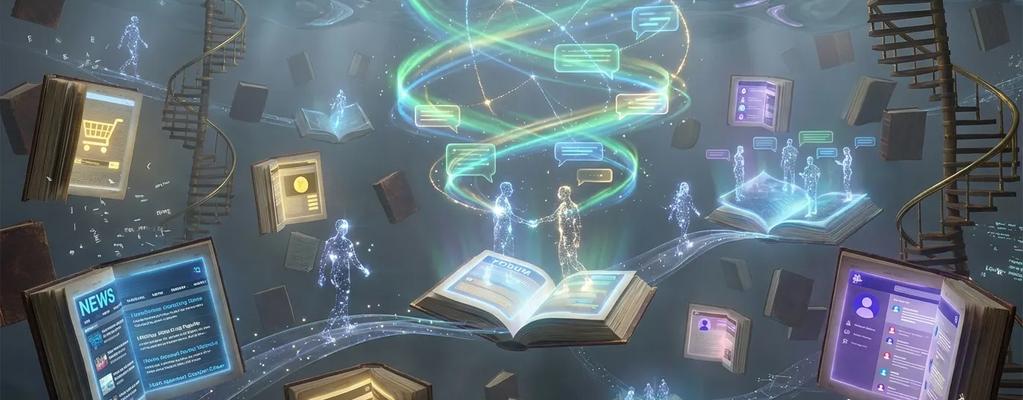

It's late at night. Breaking news about a major global event has just dropped. Over 250,000 people have read the article in the last hour alone. Hundreds of them are staring at the exact same paragraph you are, right now. Yet you sit alone. Your screen glows in the dark, and there's not a single sign that anyone else is here with you.
To share the moment, you'd have to leave the page entirely — copy the link, open X or Reddit, paste it into a post, write some commentary, and hope that someone eventually responds. By the time they do, the moment has evaporated. The electricity of reading something extraordinary at the same time as thousands of others is lost the instant you switch tabs.
What if you didn't have to leave?
The Isolation Problem: Why the "Connected" World Feels So Lonely
The Statistics of Digital Isolation
The average person spends over 6.5 hours online every day. The vast majority of that time is passive — scrolling, reading, watching, buying. The social part of the internet is gated behind specific platforms that you have to actively navigate to. There are two distinct layers to our online experience:
- The Consumption Layer: The New York Times, Amazon, Wikipedia, blogs, documentation sites, product pages — where we spend most of our time reading and browsing in silence.
- The Discussion Layer: Social apps like X, Reddit, Discord — entirely separate destinations that require you to leave whatever you were doing to participate.
The Friction of Context Switching
Every time you want to discuss something, you have to leave the environment where you encountered it. You read a funny line in a blog post — would you really navigate away, open your social feed, compose a post just to say "LOL"? Probably not. And that's the problem. The internet is missing what you might call ambient social presence — the simple awareness that other people are here, right now, experiencing the same thing you are.
The URL Revolution: Turning Addresses into Meeting Places
Poppin isn't another social app asking you to create a profile and build a new feed. It transforms the browser itself into a social space. The core insight is deceptively simple: the URL is the location. If you and a thousand other people are on the same URL at the same time, you're already in the same room. You just lack the windows to see each other.
How Poppin Works: The Social Layer
Think of it as browser overlay technology — a transparent sheet of glass placed over a painting. The painting remains untouched; you can still admire every brushstroke. But now you can write on the glass, point at details, and see the notes that others have left. Poppin doesn't alter a website's code or interfere with its design. It simply adds a social dimension on top of whatever you're already looking at.
The Tech: Real-Time and Peer-to-Peer
Under the hood, Poppin uses WebSocket connections to establish persistent, low-latency links between users on the same page. Here's what makes it work:
- Dynamic Lobbies: The moment you visit a URL, Poppin answers a question nobody else can: "Who else is here?" You're instantly placed into a lobby with every other active Poppin user on that page.
- Fluidity: As you navigate from page to page, your social room updates in real time. Clicking a link is like walking through a door — you leave one conversation and enter another. You're essentially surfing through a series of dynamic chat rooms that map perfectly to the web you're already browsing.
This is contextual social networking in its purest form — you're not connecting with people because an algorithm thinks you might like them. You're engaging with people who are currently interested in the identical content you are, at the exact same moment.
Transformative Use Cases
1. E-Commerce: Shop with Friends (Finally)
You're examining a pair of hiking boots on an outdoor retailer's site. Poppin shows 15 other people browsing the same product page. You drop a quick message: "Does this run small?" Within seconds, someone who already owns the boots responds. Another person shares a discount code they found. The solitary, uncertain experience of online shopping transforms into something that feels more like walking through a store with knowledgeable friends.
Better yet, you can invite friends directly to a URL and walk through online stores together — pointing out items, comparing options, and making decisions as a group, just like you would at a physical mall.
2. News and Media: The Instant Town Hall
When a major story breaks, thousands of readers converge on the same articles simultaneously. With Poppin, that article's overlay becomes a live town hall. Readers can debate the implications of specific paragraphs as they read them, share additional context, and flag potential misinformation — all without leaving the page.
3. Educational Content: The Global Study Group
Imagine you're working through a Python tutorial or reading a Wikipedia article on quantum physics. With Poppin active, you can see other students and learners on the same page. Someone's stuck on the same concept as you. Someone else just figured it out and is happy to explain. Co-browsing transforms solitary learning into collaborative discovery, creating spontaneous study groups that form and dissolve naturally.
4. Entertainment: Decentralized Watch Parties
URLs become theaters. When a new music video drops or a live stream goes viral, fans gather on the same page. The Poppin chat floods with real-time reactions. It's the shared cultural moment of a live premiere, regardless of who's hosting the content. No coordinating watch parties. No syncing timestamps. Just show up to the URL and you're part of it.
Privacy & Implementation: A User-First Approach
No Tracking Across Sites
When you're on Site A, you're in Room A. When you move to Site B, you leave Room A and enter Room B. Poppin doesn't link your browsing events together across sites to build an advertising profile or sell your data. Each URL is its own isolated social context.
One-Click Activation
- Dormant by Default: Poppin stays quiet until you want it. Browse in "Ghost Mode" with no social layer visible, no presence broadcast, no interruptions.
- Active on Demand: A single click expands the overlay, reveals who's on the page, and opens the conversation. Another click and it's gone.
Conclusion
The first era of the internet gave us documents — static pages linked together (Web 1.0). The second era gave us centralized platforms where we could interact, but only within walled gardens (Web 2.0). The next era isn't about building more platforms. It's about presence. It's about knowing that no matter where you go on the web, you're never truly alone.
Stop browsing silently. The people you want to talk to are already on the same page.
Download Poppin Now and say hello to the internet you've been missing.