Digital Ghost Towns: How 2.5 Million Websites Became Empty Despite Having Millions of Visitors Daily
 ·
November 24, 2025
·
8 min read
·
November 24, 2025
·
8 min read
Imagine Amazon's product page for a pair of noise-canceling headphones. On any given day, over 300 million active users browse the platform. Thousands of people are looking at the exact same product page simultaneously, reading the same reviews, weighing the same pros and cons. Yet they exist in total silence, completely unaware of each other.
In a physical store, this would be a crowd — people asking each other opinions, comparing notes, swapping recommendations. A sales floor buzzing with energy and conversation. But on Amazon? Silence. Just you, a product listing, and a "Buy Now" button.
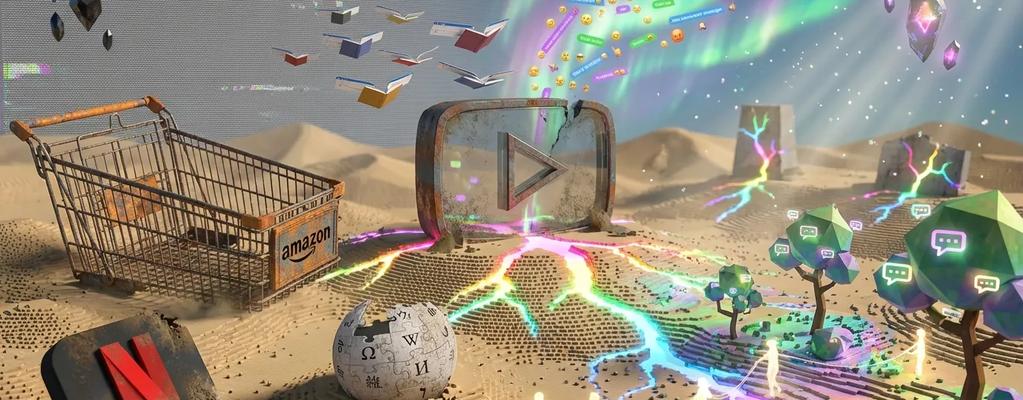
This is the defining paradox of the modern internet: digital ghost towns. The visitors are there — millions of them, every single day — but the community is missing. The web has become the world's most populated desert.
The Ghost Town Phenomenon: High Traffic, No Pulse
The internet was supposed to connect us. Instead, it built 2.5 million websites that function more like vending machines than gathering places. The old "90-9-1 rule" of internet participation — where 90% of users lurk, 9% contribute occasionally, and 1% create content — has devolved into something closer to a 99-1 rule on most websites. The lurkers have won, not by choice, but by design.
The Death of the Comment Section
Over the past decade, major publishers have systematically shut down their comment sections. Reuters, NPR, The Atlantic, Popular Science — one by one, they pulled the plug on reader discussions, outsourcing conversation to X (formerly Twitter) and Facebook. The reasoning was understandable: moderation costs, trolling, legal liability. But the consequence was devastating.
By removing comment sections, these websites stripped themselves of their "third place" status — that sociological concept of spaces that aren't home or work where community forms naturally. A news article became just a billboard you drive past. A product page became just a vending machine. The content remained, but the communal experience of consuming it together vanished entirely.
The Rise of Passive Consumers
The web's fundamental architecture didn't help. HTTP was designed for documents, not conversations. The static, request-response model of the web — you request a page, the server sends HTML, you read it — doesn't naturally support the kind of browser-based social spaces that would allow visitors to interact.
The result is an astronomically high "interaction cost" on most websites. To talk to someone about a webpage, you have to leave that webpage — copy the URL, open a messaging app, find someone who cares, paste the link, and hope they visit it. By then, the moment is gone. So you don't bother. You read, you leave. Another ghost in the machine.
The Economic Cost of Disconnected Decisions
This isolation isn't just a social problem — it's an economic one:
- Decision Paralysis: Without real-time peer validation, shoppers hesitate. They open 47 tabs, read contradictory reviews, and eventually abandon their cart. Cart abandonment rates hover around 70% across e-commerce, costing the industry billions annually in lost revenue.
- Misinformation Vacuum: Without live fact-checking from fellow readers, false information on news sites goes unchallenged for hours, days, or even months. A misleading headline becomes "truth" simply because no one was there to push back in real time.
The Living Web Revolution: Turning URLs into Gathering Spaces
What if we could layer a social fabric over the existing web without requiring websites to change a single line of code? What if every URL could become not just an address for content, but an address for community?
This is the premise behind the living web — a paradigm shift from isolated browsing to shared experience, powered by the browser itself rather than the websites we visit.
Transforming Static Pages into Dynamic Rooms
With Poppin, every URL acts as a meeting address. The webpage itself doesn't change, but a social layer activates the moment multiple people are present. Think of it like this:
- wikipedia.org/wiki/Roman_Empire becomes a lecture hall where history enthusiasts debate and discuss
- nike.com/new-release becomes the line outside a sneaker store where fans swap sizing tips and hype each other up
- cnn.com/breaking-news becomes a bustling café where people process current events together in real time
The URL is the room. The visitors are the inhabitants. Poppin is the architecture that makes them visible to each other.
The Power of Synchronous Experiences
The key ingredient is synchronous connection. Not comments left for future visitors. Not reviews written months ago. Live, real-time chat with people who are on the same page as you — literally.
This creates something the web has never had: real-time web habitants who share the exact same context. When you're looking at a product page and someone says "I bought this last week, the battery life is amazing," that carries weight in a way that a six-month-old review simply cannot.
Poppin enables URL-specific forums that emerge organically, without requiring the host website's permission or participation. The social layer lives in the browser, not on the server.
Where Ghost Towns Become Cities: Real-World Scenarios
1. Government Websites: Bureaucracy with a Buddy
Picture the IRS tax filing page during tax season, or the DMV's online appointment system. These are some of the most confusing, frustrating websites on the internet, visited by millions of people who all share the same bewilderment.
Now imagine 300 confused citizens on the same IRS page, helping each other navigate the bureaucracy in real time. "Which form do I need for freelance income?" "Has anyone figured out the deduction for home office?" Suddenly, a nightmarish government website becomes a self-organizing support group.
2. Medical Information Sites: The Waiting Room
WebMD, Mayo Clinic, and health information pages receive billions of visits from people who are often scared, confused, and alone. They read about symptoms and spiral into worst-case scenarios because there's no one to provide perspective.
With a social layer, these pages become digital waiting rooms where patients share experiences. "I just had this surgery last week, the recovery isn't as bad as the article says." That single sentence from a real person can do more for someone's anxiety than ten paragraphs of clinical text.
3. Job Boards: The Applicant's Lounge
LinkedIn and Indeed job listings are visited by hundreds of applicants who never interact. Each person applies in isolation, wondering if the position is even still open, what the salary range really is, or whether the company culture matches the description.
A social layer transforms these pages into applicant lounges — where candidates discuss roles, share interview tips, flag outdated listings, and even coordinate referrals. The job search becomes a team sport instead of a solitary grind.
4. Streaming Platforms: The Global Living Room
Netflix and YouTube are consumed by millions of people simultaneously, yet the experience is almost entirely solitary. You might text a friend about a show, but you're not watching with anyone.
Imagine global watch parties that form spontaneously around any piece of content. Reacting to a plot twist with fans worldwide. Debating a documentary's thesis with strangers who are just as passionate as you are. The streaming platform becomes a global living room.
Building Digital Neighborhoods
We are moving from a "User vs. Interface" era to a "User vs. User" era. For the past three decades, the web has been about the relationship between a person and a screen. Click a link, read a page, fill out a form. The interface was everything.
But the most valuable asset on any webpage isn't the content — it's the people viewing it. A product page with 10,000 simultaneous visitors contains more collective knowledge about that product than the page itself ever could. A news article with 50,000 readers has 50,000 perspectives that never get shared.
The ghost towns are full. We just need to give the ghosts a voice.
Stop haunting websites — start living in them.
Ready to populate the web? Install Poppin today and turn your browser into a passport to the living internet.